All posts by Beth

How to: Drive to Morocco from Spain

I had only been in Algeciras, Spain for about 5 hours, and already it was quite clear to me that the only reason one comes to Algeciras, Spain is to stock up on groceries, and take the ferry to Morocco. There were hundreds of campers and RVs scattered around the parking lots of the supermarkets and hardware stores of this huge shopping complex. We spent our one day in Algeciras buying what we thought we might miss being away from Europe — wine, beer, sunscreen, and popcorn kernels.

Friday, December 29

The alarm went off at 6am this morning. It was pitch black outside and I did not want to move from my damn cozy van bed. I snoozed the alarm and rolled over onto Michael’s chest. “Hey Michael, what do you want to do today?” He smiled, “wanna go to Africa?”

We finally peeled ourselves out of bed and made the van ready for driving, or as we like to call it “car-erizing”. The drive to the ferry port was fast, not many cars on the road at this time, and we followed the signs that said TANGIER. We quickly found which queue to join, it was the one with 30 or so RVs and campervans. A quick check of our ferry boarding cards and we were on the boat.

We found a seat in the main deck and filled out our declaration forms. There was a huge queue of people along one side of the room. At the front of the line, two official looking men sat at a table and stamped passports and documents — customs. We would fill out our cards now, but wait until the line died down to go over there

When the boat set sail we went to the cafe and ordered a tea, a coffee, and two croissants. We sat at a table and scarfed them down. A man sat down across from us. He saw our passports on the table and, in broken English, with a thick German accent, told us how in 2008, he and his wife went around Canada, the USA, and Mexico for one year in a camping car. Cool! We chatted with him a while, about his time in Jasper and the Rocky Mountains, until Michael noticed the queue for customs disappear entirely, and the men begin packing up their computers! OH NO! We excused ourselves from the German man and ran to the table. The men rolled their eyes, the one unpacked his computer, and took our passports. We apologized for being late. The man looked at Michael’s passport. He saw Michael’s last name, “Quick?” he asked. Michael nodded. He closed the passport and handed it back to Michael. “Pretty slow if you ask me…” and smiled. Haha!

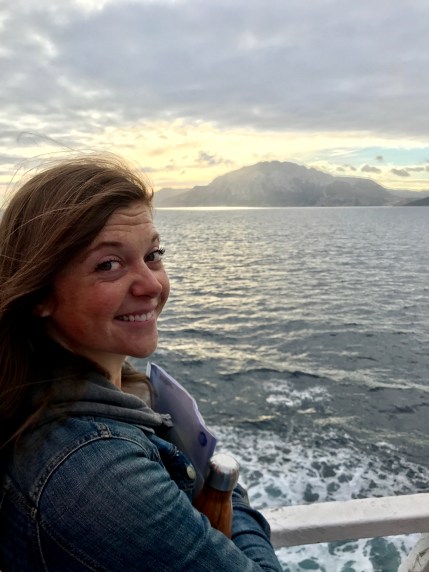
We went to the deck and soaked in our surroundings. Sailing away from the great Rock of Gibraltar, past the beautiful coast of Spain, and towards the rugged and totally unknown-to-us coastline of Morocco. The wind was crisp and the sun, still low in the sky, rose behind a few big, billowy clouds.
Enlight14

The German man came to meet us on the deck. He told us he comes to Morocco for three months, every year for fourteen years. In Canada, we would call this man a snowbird — someone who escapes winter in their own country and heads to warmer weather. He gave us some good advice about the border crossing, things to do in Morocco, places to see, and where to stay. He really set our mind at ease. If he can do this border crossing fourteen times, then we can do it once.

The ferry grew closer and closer to the shore, and when the announcement came on for us to go back to our cars, we said goodbye to the German man. We shuffled down the steep steps with the other campervan’ers, and waited in the van until we were told to go.

We drove through to customs and parked the van in some shade. We sat and waited. A man came to check the vehicle registration and our passports. We waited. I saw a drug sniffer dog go into a few cars. We waited. I saw them ask a man to take out almost the entire contents of his trunk, and then laughed as they all tried to help him fit it back in. We waited. Finally, they asked us to open the doors. We didn’t need to take anything out. The man looked briefly in the back, in the glove compartment, and asked if we had a gun or a drone. We have neither, so he waved us on. That was it! It was a long wait, about an hour or so, but so relaxed.

Morocco is going to be a huge adventure. I am happy to be here. I am happy be checking other country off my to do list. I am so excited to see what we have in store for the next few months.

Stay tuned for more tales of my Moroccan adventure! Let me know what you think in the comments. Been to Morocco before? I would love to hear from you, favourite places, suggestions what to see, where to eat, and any tips from fellow travellers!

IMG_5161

Here are some tips for driving across the border from Spain to Morocco.

  • We did the crossing from Algeciras to Tangier Med. The ferry tickets are more expensive, but I received good word from one of my favourite Instagrammers (@sloopemc) that the Tangier Med customs experience is far more relaxed than the one at Tangier proper. She was right. The experience was super laid back.
  • We bought our tickets from Agencia de Viajes Normandi. The woman who helped us was very thorough. For €200 we got an open round trip ticket for two adults and one campervan less than 6m. She also gave us the customs forms to fill out for entry to Morocco, and for our exit in a few months, and she completed the customs forms for our vehicle. We went into this border crossing more prepared than I could have hoped!
  • The shopping in Algeciras is great. You can sleeping your van in the big shopping complex out of the centre (this is where we slept overnight). There is a huge Lidl, and an even bigger Carrefour to stock up on wine, beer, and whatever else you might miss from Europe. You can get alcohol in Morocco, it’s just kind of expensive.
  • Customs
    • Put your patient pants on. The wait is long, so prepare yourself for it.
    • We were asked if we have guns or a drone, since we have neither, our van wasn’t checked almost at all. I saw people nearby with the drug sniffing dogs having a sniff around their car, I saw others who had to remove everything from their car.
  • Right outside the border are people selling SIM cards and there are multiple places where you can have your money changed for Dirhams. After the SIM card people, you won’t be able to use Euros again
Van Life

So, we bought a van….

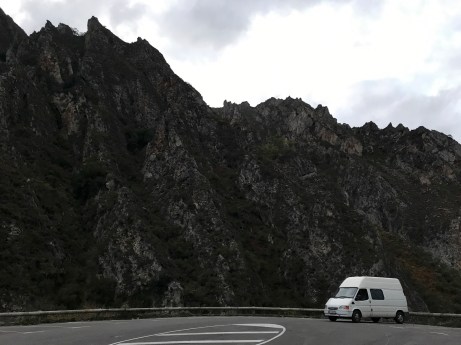
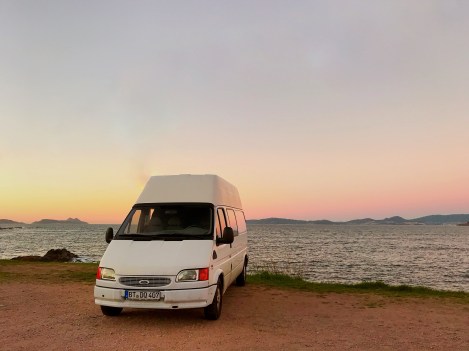
The van is named Vinnie, it is a 1997 Ford Transit. Vinnie may not be much to look at on the outside, but this van does exactly what we need it to do.

Enlight3

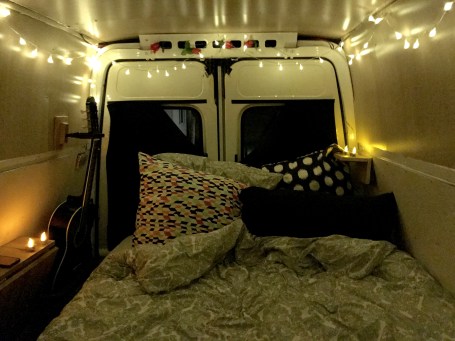
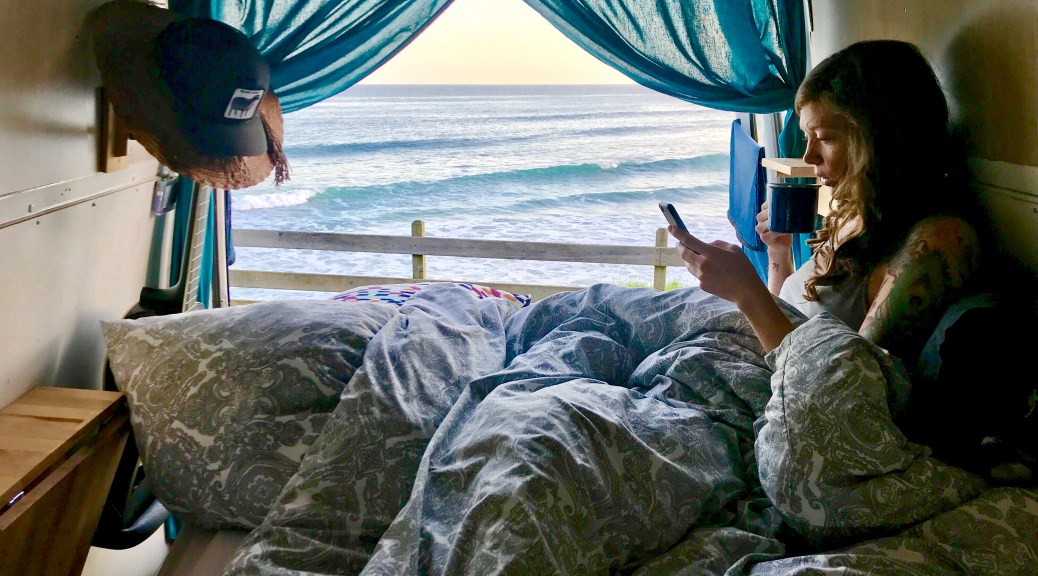
We have a solar panel on the roof to power all our gadgets. We have a gas stove with two burners, built right into the countertop. We have running water with a pump powered by the solar. We have a bed that is cozy, with a big duvet and too many pillows to know what to do with. Our bed slides up and converts into a sectional-style couch that wraps around a table that folds out from the wall. We have enough storage space in the back for two folding bikes, a table, two chairs, and all of our tools. And of course, we have fairy lights. That being said, the van is a never-ending project. I learned to sew in order to sew our blue drapes (pictured further below), we just finished building a beautiful new box over the wheel well out of a few pallets we found in an alley, and we rigged our new surf board to hang from the ceiling!

IMG_6015

Van life is amazing. We drove through France and did the France Passion program (read about France Passion here!), we drove through the north of Spain (read ten things to do in the north of Spain here!). We have stayed in campgrounds, on farms, in the parking lots of trailheads. My favourite though, is finding a parking lot by the beach, out of the cities. We wake up with the beach to ourselves. We can open the back doors, and enjoy our coffee looking out over a perfect ocean.

IMG_2773

When we just can’t find a sneaky camping spot by the beach, we use two applications on our iPhones; Camper Contact and Caramaps. These apps show us campervan parking spots where we can stay the night, and service stops for when we need to fill up with clean water, drain our waste water, or even where we can do laundry if we need it.


Here’s some info about driving in Germany:

If you are going to drive in Germany for longer than 6 months, or anytime after 6 months of being there, you need a German driver’s licence OR an EU driver’s licence. If you are from Canada, your International Driver’s Permit, will NOT cut it. You have to have a German one. To get this, you go to the Bürgeramt (same place you register your address), and apply. They take a photocopy of your Canadian licence and your passport. You can’t pay cash, you must pay from a German bank account! Maybe bring a German friend who can speak for you and use their card to pay. Otherwise, expect to speak German at the desk.

IMG_7017

We bought our van in Germany, and brought it to Berlin to be registered. We are registered in Berlin, and would have to register the car there too (for information about visas and registrations in Berlin, check this article here). In Berlin, it takes 3 weeks to register a vehicle and be able to drive it, so we left. We drove to Bavaria. We registered a new address there, and were able to register our van there too. We needed a German bank account to do so, for the taxes of driving a car come off your account automatically every month.

As Canadians we required International Driver’s Permits to drive in Spain. No other country required it as far as we know.

IMG_9094

Living in a van with your partner is an our of this world rewarding challenge and the trials and tribulations that we have faced and overcome have only made our love for each other and our love for van life stronger. Stay tuned for more stories and updates as we continue to drive the van to Morocco!

And as always, if you have questions or concerns, comment below or send me a message!

IMG_9095


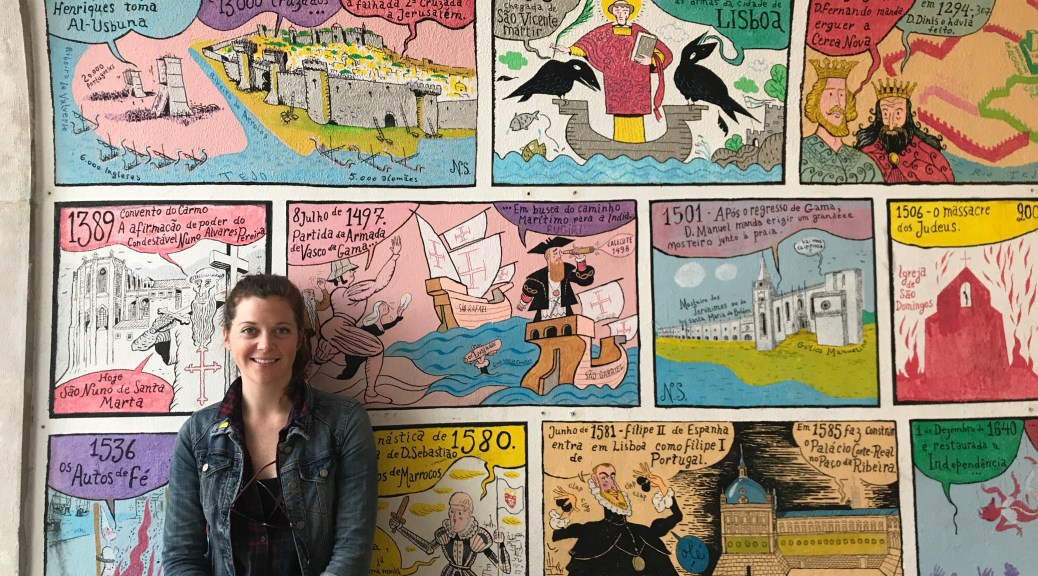
Five things to do in Lisbon for under €5

So, you’re in the capital of Portugal. You did a day trip to Sintra, you’ve spent a beachy day at Caiscais, now you’re looking for some things to do in Lisbon itself. Here are my top five things to do in the city:

1) Free Walking tour

IMG_3229

I am not sick of writing it, I am not sick of doing it, free walking tours are the best activity one can do in any city. SANDEMAN’s New Europe free walking tours are some of the best free walking tours I have ever done (and I proudly say this with no compensation from the company). The tour guides are so well informed about the history of the city, and so clearly love this place, it is hard not to fall in love yourself. They work on tips, so you decide how much the tour was worth at the end. I generally stick to €5-€10, because I am on a crazy budget, but you tip whatever you feel!

Cost: €5 (-€10 if you’re not a cheapskate)


2) Get the view of the city from St George’s castle

IMG_6000

You can take an elevator for €7 up most of the way to this observation deck, OR if you find the monastery, there is a little pathway beside it on the right. Follow the path and you will find the top of the elevator. You just saved €7, my friend! You still pay €3 to walk up the stairs all the way to the top of the lookout point and the view is spectacular. I would say it may even be worth €7 for the elevator as well as the €3, but then you will drink those two beers you bought with that €7 and you’ll thank me.

Cost: €3 if you take the shortcut!


3) Get Lost in Alfama

IMG_8235

The streets of Alfama were built to make enemy soldiers get lost. It was some of Lisbon’s greatest defense! I can see how one could get lost… Turn a corner, and you’re at a dead end. All of a sudden, the only way to get home is by climbing a super skinny, dark, steep staircase. Streets are only as long as 100m until they turn or end. Go, wander, bring some water just in case. You can continue making your way uphill and find the Miradouro das Portas do Sol Observation Deck for a view of Porto you won’t quickly forget!

Cost: Free. €1 if you buy a shot of Ginginja…


4) Eat dinner at Time Out Market

IMG_8234

The Time Out Market, located a quick walk from old town, is a restaurant market full of many different vendors selling many different food and drinks! It’s the perfect night out, because everyone can get something different! I had delicious croquettes from Croqueteria Está Aquiz, tried some Oysters from Monte Mar, and split a bowl of Poke from the Hawaiian fusion place. Come here to drink beer, eat a delicious meal, and people watch.

Cost: Whatever you want it to be!


5) Eat a pastel de nata at Manteigaria

IMG_8590

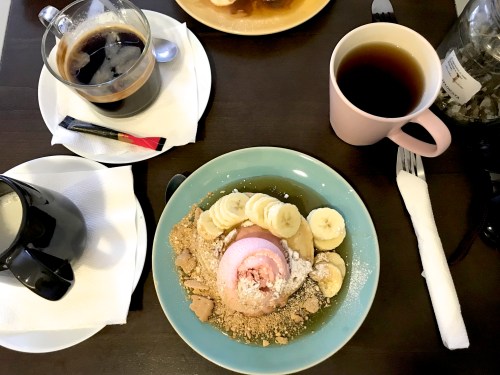
A Pastel de Nata is an incredibly delicious, creamy, custardy Portuguese pastry. In Lisbon you can get one from any bakery, but the best Pastel de Nata is from Manteigaria. When you are walking through the streets of Lisbon and you hear a bell toll, no, it is not a church bell (well it might be, there are a lot of churches in Lisbon) it is the bell of bakery Manteigaria signifying you that a fresh batch of Pastel de Nata has just come out of the oven! RUN there. Do not walk. The most amazing custardy tart awaits you!

Cost: €4.50 for two tarts, a coffee, and a tea


Looking for some more inspiration? Read about my day in Lisbon here!

Heading to Porto? Check five things to do in Porto here!

Five Places to eat in Porto, Portugal

I like to think of myself as the queen of budget traveling. Finding good quality, artisinal places to eat can be hard, especially when one is on a budget as low as mine. But it’s not all ketchup packets and crackers! I do still eat out and enjoy a meal on the town every once in a while.

Looking for a delicious meal out in Porto? Here are my favourite five places to dine:

1) O Diplomata for a big, pancake breakfast

IMG_8165

Breakfast is the most important meal of the day, so kickstart your metabolism with a huge stack of homemade pancakes from O Diplomata. Here, one can decorate their pancakes with various toppings, fruits, sauces, and even ice creams! You can’t go wrong with the perfect pancake and whatever topping you choose!


2) Base for cocktails and beanbag chairs

IMG_8164.jpg

The best time for a cocktail is anytime. We were tired from walking up and down the many hills in Porto, and needed a place to rest our weary legs and enjoy an ice cold beverage. Base is a super hip cocktail bar, nestled in a park in the middle of the city. Here, you will find grassy knolls, bean bag chairs, and homemade crate furniture. Sit under an olive tree and order a cold one!

3) Tapabento for an unforgettable twist on Portuguese classics

IMG_5381_72
Image from the Tapabento website

Tapabento is the perfect place for a delicious dinner. It is definitely not the cheapest meal I’ve had in Porto, but it is absolutely the most unforgettable while still being reasonable. The fois gras toastie changed my life, and I will be chasing that cucumber ice cream forever.

4) Brick for the perfect shareable meal

46F77F80-5742-4C8E-A184-44D804623077
Pic by our lunch date @jm_brewpub

It’s fun to eat rich and decadent food while on holidays, but sometimes your bod needs a break! Brick is the perfect place for a healthy, shareable meal. The toasties are to die for. Order a few rounds of each and you’ll walk out satiated and jubilated! Try the pork cheek toastie!

5) Ro for Ramen something different.

1-1
Image from this website

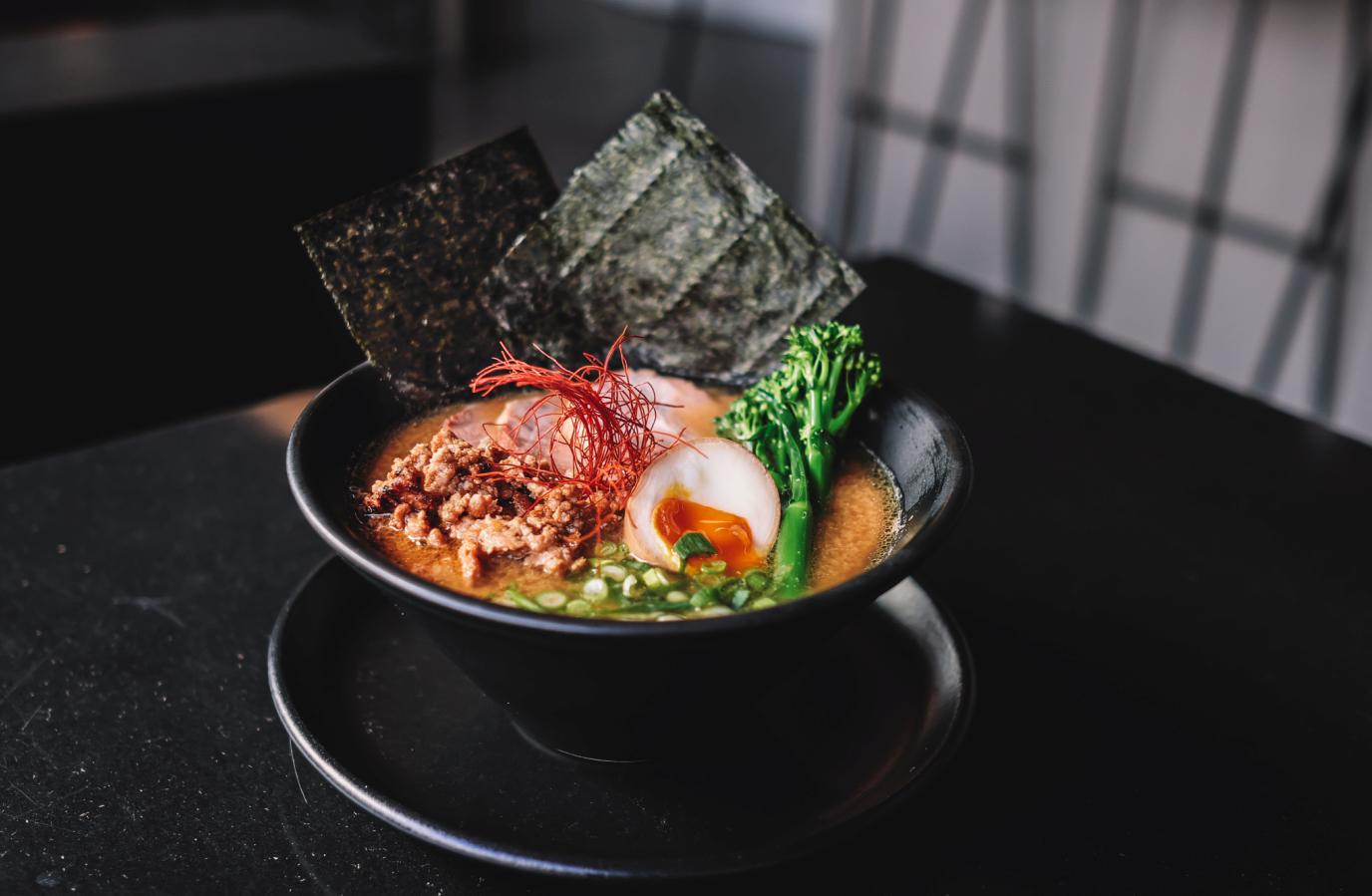
Portugal has some delicious classic dishes, yes, the Francesinha changed my life, but sometimes when you are traveling you want to taste something a little different. Right in the middle of the coolest area in Porto, is Ro, a ramen place! Enjoy a delicious bowl of steamy,  hot ramen, and wash it down with their signature red sake sangria!

6) Zenith for a bonus breakfast!

IMG_8044

If you’re like me, you enjoy breakfast so much, you list two breakfast places in your “Five Things” article about where to eat. I couldn’t go without mentioning Zenith’s incredible twist on eggs benedict. They bread their poached eggs, serve it with avocado and crispy serrano ham. Paired with a breakfast cocktail, you can’t go wrong!


Full of food and looking for something to do? Check out Six Things to do in Porto here!

Heading to Lisbon next? Let this story inspire you!

Six things to do in Porto, Portugal

Going to Porto?

Porto is a totally beautiful city in the north of Portugal. Built alongside the huge Douro river, with views of the ocean, Porto is a perfectly picturesque place in Portugal you won’t want to miss (pardon the alliteration, but I couldn’t resist).

Here are SIX things you can do in Porto:

1) Learn too much on a free walking tour

IMG_7791

As always, I am a huge advocate for free walking tours (Madrid, Valencia, Florence…). The best way to see a city is to walk around it, and on a free walking tour, you get stories and fun historical facts to accompany the views. Your tour guide works on tips, so you decide how much they deserve at the end of the tour. I tend to tip €5-10 (because I am traveling for an extensive period of time and have a SUPER tight budget), but it’s up to the attendees what they pay. I like that.

We did our tour with Porto Walkers, check their website here!


2) Indulge in a Francesinha sandwich

IMG_7802

How could you go to Portugal and not eat the Portuguese food? About 50 years ago the Francesinha sandwich was invented at a cafe in Porto, and now, has become a staple dish in the city. Vegetarians and vegans look away! This is a sandwich of bread, meat, sausage, bread, meat, and sausage, wrapped in melted cheese, topped with a fried egg, served floating in beer sauce, with fries on the side. Oh. My. Gosh. It is amazing! Trust me you are probably going to want to share this sandwich. I ordered sauce on the side so I could decide how submerged I wanted my sandwich.

Cafe Santiago on R. de Passos Manuel serves an authentic Francesinha for €9.


3) See Porto from a different angle

IMG_7796

Porto is a beautiful and super colourful city. They say the buildings along the river were painted bright colours as an attempt to cheer up the women whose lovers and husbands left on the fishing boats for weeks and months at a time. My favourite view of Porto is actually from Gaia, the city across the river. It is said that the best thing about Gaia is the view of Porto from the Serra do Pilar. You can either walk across the top level of the Luis I Bridge, which is dazzling, OR walk along the bottom level and make the trek up the hill on the other side. For a view of Porto you won’t forget, head here.


4) Go to the beach!

IMG_3427

Porto is right on the Douro river, and very close to the Atlantic coast. Matosinhos is a beautiful little beachy neighbourhood that is only a 15-20 minute metro ride away from Porto. Here, you can try your hand at surfing some perfect beginner waves, have a beer on the patio of Lais de Guia, or just buy a bottle of wine and some olives at the nearby Pingo Doce, and bring it to the sand to watch the sunset!


5) Find out how Port Wine is made (and then drink a bunch)!

IMG_7854

Porto, and more specifically, the Douro valley, is the home of Port Wine. In fact, in order for wine to be classified as Port Wine, it must come from the Portuguese side of the Douro valley! The grapes are grown and processed at the vineyards, about 100km away from the city of Port (see next thing to do), and the wine is brought to the wine lodges in the city to age. Porto Walkers does a great Port Wine tour for €20 a person. You’ll see three wine lodges and taste seven wines. This is absolutely the best bang for your buck!

For more information, check out the website here!


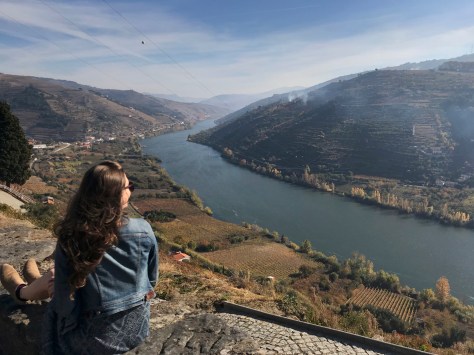
6) Go to the Douro Valley (where Port Wine grapes are grown)!

IMG_7957

Now that you know where the Port Wine is aged and stored, it’s time to check out the vineyards where the grapes are grown! When looking at going to the Douro Valley from Porto, there are so many options online for tours you can book — a big bus takes you to the valley, you do a tour and a tasting, maybe hop on a boat and cruise down the Douro river — and the cheapest one goes for about €100 per person. The other option, is to hire a personal driver to take you and yours out to the valley for a private day. This is what we did. We booked through Maia Tours (their website here) and Ricardo gave us a personalized tour. We didn’t want to do another Port cave tour (we had done so many with Porto Walkers), and were more interested in lunch and multiple tastings, so he made that happen. He called a few wineries and made all the reservations for us. We were able to sit back, relax, and enjoy the ride! For the day with Ricardo, it was only €250 (€62.5 each for four people)!


Bonus activity:

Eat Port Wine ice cream at Porto Cruz!

38441C9C-CEB7-4F46-9055-16C9C4829667.jpeg

In Gaia, amidst all the Port Lodges and wine tours, is Porto Cruz’ ice cream shop. Here, you can sample an incredible and delicious 10 year tawny Port mixed into a perfect sorbet. I promise you will not be disappointed!!


Need more? Check out Five Places to Eat in Porto here!

Ten Things to do in the North of Spain

My first time in Spain, I  travelled the south and the Mediterranean coast — Seville, Valencia, Barcelona, Madrid. It was all so beautiful! I fell in love with the food, the weather, the beaches, the architecture, and the history. Spain is gorgeous! That being said, there is a lot more to Spain than the south. In fact, the north of Spain has some of the most breathtaking landscapes I have seen. The north is stunning, and I would argue wildly underrated (and under-visited).

In 2017 I spent two months driving along the north cost of Spain in a van named Vinnie. We drove into Spain along the west coast of France, and drove next to the ocean (almost) the entire way through to Portugal! Along the way, I discovered that the north of Spain is amazing; breathtaking landscapes, beautiful architecture, and rich cultures.

Here are ten things to do in the north of Spain:


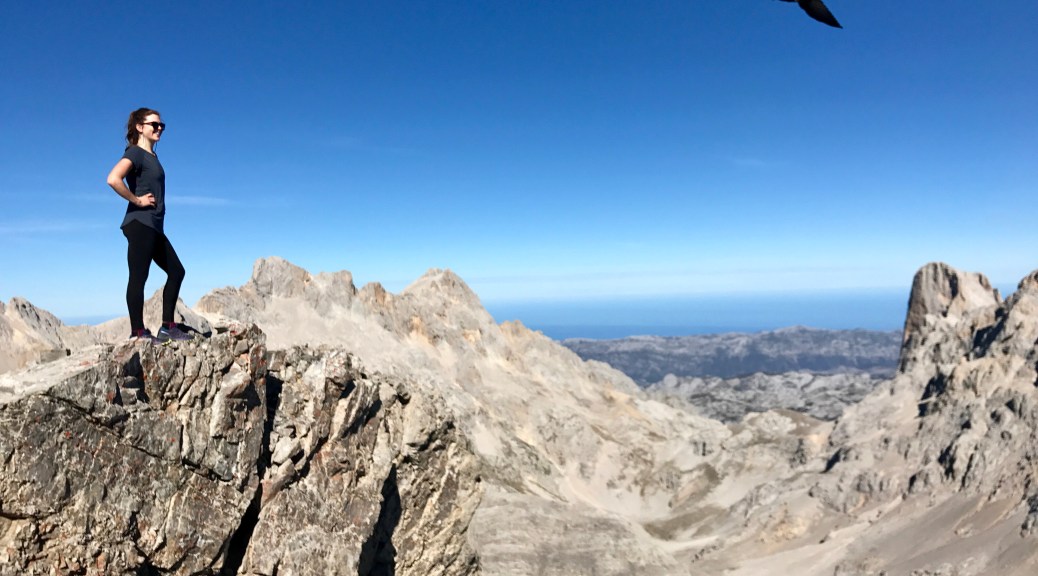
1. Hike through the Picos de Europa

IMG_2498
On top of the Torre de los Horcada Rojos

The Picos de Europa is a super stunning mountain range in the north of Spain. The mountains here are perfect for hiking, bicycling, climbing, and more! The roads are beautiful to drive, the scenery is out of this world, and what better way to see a country than from the top of a mountain? We did a few different hikes while we were in the Picos de Europa. We did an easy day along the Ruta del Cares, a quick hike up to Bulnes, and a bigger hike up to the summit of Torre de los Horcados Rojos near Fuente Dé. We also did a via ferrata, which was a totally killer experience.

For more information about hiking in the Picos, check this out! And read about my via ferrata experience here!


2. Wander the streets of old Bilbao

IMG_6685

Bilbao is the capital of the Basque country. It is the home of beautiful architecture, great shopping, and delicious food. Home also, to the infamous Guggenheim museum. What? But I thought that was in New York? Yes! So did I! Turns out there is a Guggenheim in Bilbao too, and I might argue the architecture of the Spanish Guggenheim outshines that of New York (sorry to offend the beehive fans). There is much to do in Bilbao, wander around the shopping district of Indautxu, drink a tinto de verano while sitting along the too-cool street, Erronda Kalea, or just sit on any bench by the river and watch the people go by.


3. Eat Pintxos and drink wine in Logroño

IMG_6308.jpg

Logroño is the capital of the La Rioja wine region in the north of Spain. La Rioja is home to wineries that export their wine so far and wide, that I can buy a bottle in the local wine shop in my hometown of Calgary, AB, Canada. There are some big wineries here. Which means, there are lots of people, and lots of good food. Take an evening to stroll down the street of Calle San Juan and try a pintxo (pronounced peen-cho) from each place. Pintxos are tapas in the Basque language. Start at Bar Angel with a tower of garlic mushrooms and a glass of red, and at each place order a pintxo and a wine, pintxo and a wine. Then you’re doing it like a local!

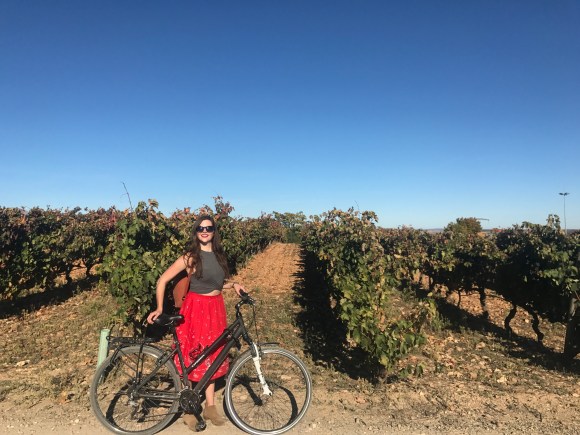
4. Bicycle the wineries of Rioja

IMG_6551

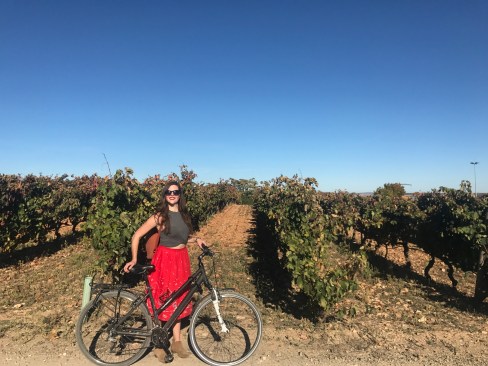
As I mentioned, La Rioja is home to some big, beautiful wineries. There are plenty of small wineries too! Sure, you can go winery hopping by car, but what fun could that be for your sad friend who has to drive? Bicycle is the only way to get around wineries. Now, a disclaimer: some of the wineries are on top of hills, some wineries are far away from each other, we planned our route accordingly — knowing that we would have a few glasses of wine at each place, and add weight to our backpacks with the bottles purchased. We rented bicycles from Navarent (their website here), and went to as many wineries as we could in half a day. Seven tasters and five bottles of wine later, we called it a successful day!

(More tips and tricks about Rioja and wineries here).

5. Take a nature walk by the Rio Urederra

FullSizeRender 32

As much as I love eating decadent food and drinking delicious wine, I feel like I can’t really get to know a place if this is my only activity. Just an hour outside of Logroño snakes one of the most beautiful places I think I have ever been, the Rio Urederra, or “The River of Beautiful Water.” This place is a magical getaway from the crowds, the bustling of the towns and villages, and the perfect place to spend a day. The walk is easy and takes about 3 hours, maybe more because if you’re like me, you will want to stop at every lookout point to take pictures.

(For more information about the Rio Urederra, read this!)

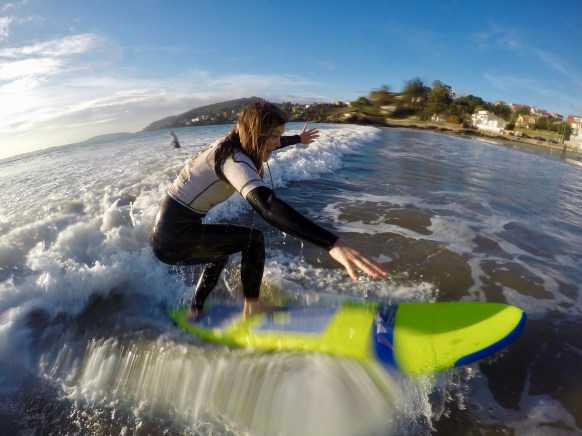
6. Challenge yourself with a surf

DCIM100GOPROGOPR0653.

The north of Spain has some of the best surf in the world! Mundaka is home to a big, sandy, consistent wave, Bakio has multiple surf schools, and Loredo has a totally HUGE beach. Surfing may not be your strong point; it isn’t mine (though I did try river surfing in Canada and didn’t make a total fool of myself), but when mother nature presents you with some of the best beginner surf in the world, you kind of have to give it a go! Plus, I wanted a good picture of me wearing a wetsuit and holding a surfboard. In almost every village and town along the north and west coasts, you can find surf schools. Some, you can stay at for a week and take lessons, and some offer one day at a time. You will, most likely, stand up on your first day. Make sure someone has a camera ready, because you’ll be back down really quick.

7. Eat the octopus in Galicia

IMG_7628.jpg

If there is one thing I know about Galicians, it’s that they know how to prepare octopus. Salt, pepper, paprika, and oil, grilled to perfection, and served with fresh bread. It is a definite must try! We shared a big plate in Razo, on the west coast, and the octopus was delicious. It is a really rich flavour, so I suggest ordering just one plate to share.


8. See a zebra at the Parque de la Naturaleza de Cabárceno

IMG_6784

This wildlife park and natural reserve is built in a reclaimed mine, and unlike an ordinary zoo, gives the animals SO much room to roam. It is really beautiful. For the entrance fee of €23 (which kind of broke our daily budget), you can enter the park, drive the entire way around to see the animals, and, if you choose, take the gondolas to have a bird’s eye view of the entire park! We saw so many animals. The day we went was a bit cloudy, definitely sweater weather, and it wasn’t nearly as busy as I imagine a beautiful summer day would be. We had the gondola to ourselves!


9. Wander through a prehistoric cave

IMG_6804 - Version 2

The cave of El Castillo is a cave boasting prehistoric art. Man, these caves are cool. I love wandering through and imagining the human that painted the art we are looking at. El Castillo is a great cave to see. You can go through the actual cave! The tours are only in Spanish, but our guide was able to explain a bit in English. It only costs €3 to enter!

The other cave we went to is the Cave of Altamira. This also costs €3 to enter, but is just a replica of the real thing. It is still very cool to see the art and learn about the mysterious people who painted it. On Friday mornings at 10:30am, there is a lottery and the five winners get to go into the real cave! We tried our luck and didn’t win, but maybe you’ll be luckier!

10. Drink cider in Gijón

IMG_7511 - Version 2

Spain isn’t all sangrias and tinto de verano. In the northern beach city of Gijón, cider is the drink of choice. All throughout downtown are siderias, special bars that serve only cider (and food of course). It is brewed naturally and so has no carbonation. Because of this, the cider is always poured in the glass from arms length to create bubbles, and is consumed immediately while the cider is still frothy. We had no idea this was the thing. We just thought the bartender at the first sideria we went was an absolute maniac. Until we went to the next sideria, and the server poured our cider the same way.

Looking for more things to do in Spain?

Read about my Spain adventures here!


Three Hikes to do in the Picos de Europa

The Picos de Europa are a totally spectacular mountain range in the north of Spain. Famous for the hiking trails with ocean views, they are a must see for anyone traveling to the north of the country. The hiking trails vary in difficulty, and they are all beautiful. Here are three hikes you can do in the Picos de Europa, plus how to get there, and their difficulty.

Ruta del Cares

IMG_2283
Can you spot me?!

This one was the easiest walk we did in the Picos. It typically begins in Poncebos and the end point is Cain, although if you want to do it the other way, I don’t see why not. The path snakes along the gorge of the river Cares, and the hike has been dubbed “the garganta divina” or “the divine gorge.” It truly is divine. The first two kilometres of the walk are uphill, but the rest is relatively flat. But, just because there isn’t much elevation gain, doesn’t mean it isn’t a hike. It’s a 22km round trip from Poncebos to Cain. A lot of folks end up doing the hike one way and then taking the shuttle bus back. We thought about it, but it’s a two hour bus ride and I do not know how much it costs. We drove right up to the trailhead in Poncebos and left our van there. We did the hike in October, and we weren’t alone. I imagine if you are here in July or August, it would be WAY busier.

Hike up to Bulnes

IMG_2397

Bulnes is a small village perched high on a mountain top. In 2001, a funicular was built up to the village, to the delight of the locals. You can take the funicular up and go for a nice day hike around the top, which was our original plan, until we arrived at the funicular and discovered it is a €23 round trip (a bit out of our budget)! Next to the funicular is the original path that locals took to and from the village before 2001. We decided to hike it. We decided this path should be called The Cheapskate Path, for it is used only by cheapskates who can’t, or don’t want to, afford the funicular. The hike is about an hour. You will pass many other cheapskates on the way. Bulnes is a very quaint little village. Most of the bars and restaurants offer a menu del dia, which is typically an appetizer, a main course, a dessert, a coffee or tea, and water or wine. They normally cost about €8-12, depending where you are. From Bulnes there are more day hikes you can do, up to different summits or refugio huts. We had our lunch and hiked back down.

Torre de los Horcados Rojos

IMG_2537

Out of Fuente Dé is an impressive gondola that takes you up 753m in 3 minutes. A round trip costs €17. The gondola spits you out at the top and from there, you will find many different hiking trails. We chose the summit of the Torre de los Horcados Rojos, mostly because it is a four hour round trip hike with a decent elevation gain, but also because it is very fun to say. This is definitely a bit more difficult than the other hikes we did. The two hours up to the end of the marked trail is entirely uphill, and of course, the last 20 minutes is a scramble to the summit. The summit is magnificent, boasting views of the ocean picture framed in between peaks. One of the most beautiful hikes I have done in Europe (and I’ve done a few! You can read about Switzerland, Austria, and Germany).

Hiked out? If you want to try something different, read about how to do a via ferrata in the Picos here!

How to: Do a Via Ferrata in the Picos de Europa

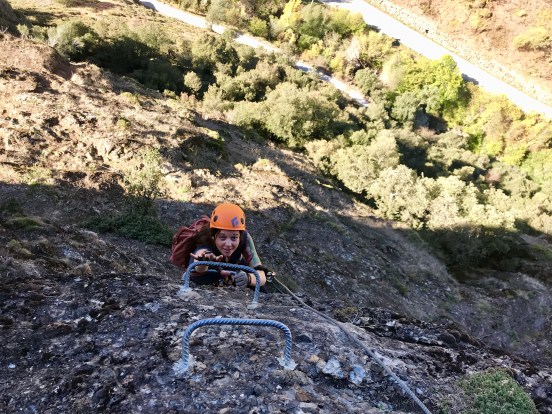
The Picos de Europa are a totally spectacular mountain range in the north of Spain. Famous for the seemingly never-ending hiking trails, this natural park is a must-see when in the north of the country. If you are hiked out though, there are other activities to try! When we were tired of hiking, we did a via ferrata! A via ferrata is a mountain climb equipped with fixed ladders, cables, and bridges. It is kind of like rock climbing, but with steps and handles. It was my first time trying it, and we wanted to do an easy one. We called up Javier at Guiatrek, rented the equipment for a very reasonable €20, and were off!

Camaleño is a beginner/intermediate via ferrata, perfect for first timers. We parked the van at the trailhead, put on our harnesses, helmets, and gloves and began up the hill. When we reached the wall, I got nervous. I looked up the wall and saw the metal hooks and handles sticking out, until I couldn’t see them anymore because they were too high up. Phew. I began shaking in my boots a little bit.

IMG_2580

There is really just one rule in a via ferrata. You have two carabiners on your harness. The one rule is to only clip and unclip one at a time. The cable that runs up along the side of the ladders and handles has breaks in it every few metres. Once you reach a joint, unclip one carabiner, clip it to the next bit of cable. Once it is clipped, only then can you unclip the next one and clip it again. The point is to always be attached to the cable, or as they call it in Spain, the lifeline.

IMG_2590

Up and up and up we went. We climbed past two mountain goats, who were very confused as to why humans were up on a wall like this. We finished the first leg of the climb, and then the second. After the second, the trail diverges here, to an easy bit, and a more difficult bit. We decided to take the more difficult bit because it took us to a Tibetan bridge; a bridge that is made up of one cable for your feet, a cable on either side for each hand, and a cable above for your caribiners.

IMG_7315

I hooked on to the cable above my head, grabbed the ropes on either side, and began my walk. “Don’t look down,” I told myself. My heart was pounding in my throat, my stomach was fluttering like a butterfly. I laughed and shrieked the entire way across. “I’m going to cry!” I laugh/yelled. I made it!

IMG_2619

This was the perfect first try at a via ferrata. I am so proud of myself that I was able to finish such a crazy climb. I would absolutely recommend it to anyone! As always, commetn below with questions and comments about this or any other via ferrata experiences you have had!

And if a via ferrata doesn’t sound like your thing, stay tuned for more tips for travel in the Picos!

IMG_7325
Post via ferrata beer….

How to: The Rio Urederra, Navarra, Spain

In the north of Spain, in a valley between two mountain ranges, lies one of the biggest wine regions in Europe — La Rioja. One could easily spend days, maybe even weeks, here, doing winery tours and wine tastings all day in the vineyards, and eating pintxos all night in the region’s capital, Logroño (if that sounds like your idea of a dream itinerary, I have some pro tips you can read here). We spent two of our three days in Logroño doing just this, and boy oh boy, it was totally amazing! On the third day, we drove out of town to Baquedano and did the stunning walk along the Rio Urederra.

We arrived in the tiny village of Baquedano. The parking lot seemed busy, but we quickly found a spot, paid our €4 and parked the van. We followed the signs towards the river. This region of Spain is just stunning. It is very desert-like, but full of both coniferous and deciduous trees, and the surrounding terrain is craggy and rugged. We found the path entrance and began.

IMG_6317

The Spanish word ‘urederra’ means ‘beautiful water’ in English, and there isn’t a doubt that this river was aptly named. After walking for maybe 15 minutes, the path connects with the river and we were able to see the water for the first time. The riverbed seemed to be illuminated with blue light, the water shone crystal clear. It was almost iridescent. We stopped to take pictures, of course, along with the few other people on the path.

FullSizeRender 32

We continued the walk, stopping along the water at every viewpoint. We continued to be blown away by the colour of the water. You aren’t allowed to swim here, which felt like kind of a shame at first, but the water is so clean, and the surrounding area so tranquil, I think it would be ruined with a bunch of sunscreen-covered bodies splashing around in the water. We came to the end of the path, where a tall waterfall cascaded down the rocks. The trees were unbelievably tall, and formed a canopy that darkened the forest floor. We turned back and followed the other path back to the parking lot.

IMG_6392

The information I read on the sign at the beginning of the walk led me to believe the entire hike would take us about 3 hours. In fact, the whole hike took us just over three hours and that included the multiple stops we made to take photos, and the long lunch stop we took to eat our sandwiches.

How to:

  • When following Google Maps or GPS, do not search “Rio Urederra” but instead, follow the directions to Baquedano. This is where the parking lot and the beginning of the trail are located.
  • We paid €4 for parking our van. I have seen some people say €3, some people say it’s free. I believe is has to do with high and low season, or maybe the size of car? Either way, I am happy to pay €4 to help with the upkeep of such a beautiful area.
  • From the parking lot, you have to walk through the village of Baquedano to find the path entrance. Follow the purple-ish signs that say “Urederra” and you will find it in no time.
  • Don’t swim, don’t feed the fish, don’t litter…just don’t be an idiot.
  • Bring snacks and/or lunch. There isn’t much in the village.
  • That being said, there is a bar once you leave the path that serves tinto de verano (my fave) for a very reasonable price!
  • IMG_6379

Bicycling around Wineries in La Rioja, Spain

If you’re like me, you like to drink wine. And if you like to drink wine, chances are you enjoy visiting wineries and enjoying wine straight from the winery itself! The La Rioja region is home to both the big, international, and the small, family-run wineries of the north of Spain. But, what’s the best way to take it all in? What’s the best way to do it? How can you make sure you drink the most wine possible? Here are some tips and tricks for the La Rioja wine region.

IMG_6551

Reserve a spot

All wine regions are different. In the Okanagan in British Columbia, Canada, you can just show up to the winery, pay $5 to taste the wines, and if you buy a bottle, you get your $5 back! In Tuscany, Italy, you have to book wine tours ahead of time and must plan your route according to when they are open and available. In La Rioja, it’s a mix of both. To go to the bodega (wine shop) and taste a few wines to buy a bottle, you can just show up (this will not be a full tasting one would get at the end of a tour, but would be a more casual tasting of wines you are interested in buying). If you want a winery tour and an official tasting of the wine, you must reserve ahead. Most winery websites have a “contact us” section where you can book online. It’s way easier to make a reservation over the phone! Just call and ask “habla englais?”

IMG_6521

Getting around

Sure, you can go winery hopping by car, but what fun could that be for your sad friend who has to drive? In my mind, biking is the only way to get around wineries. Logroño has a city bicycle system and the tourist office allows tourists to take a bicycle for free for a day! Great deal, right? Except that the bicycle system hasn’t been upgraded probably since its inception, and the bicycles are not AT ALL maintained. No pedals, no brakes, no seat, no tire. No. Just no.

Instead of wasting time with a free death trap, head to Navarent (access their website here). The man who helped us speaks great English, was so accommodating, incredibly helpful, and gave us a few pointers about our route. The cost for a full day was a bit out of our budget, but a half day was €15. For a bicycle that worked, I felt like it was great value.

***Disclaimer: some of the wineries are on the top of hills, some wineries are far away from each other, we planned our route accordingly — knowing that we would have a few glasses of wine at each place, and add weight to our backpacks with the bottles purchased.

IMG_6556

Which wineries?

My absolute favourite tour was to Campo Viejo (this is the aforementioned winery on top of a hill). This winery is built inside the hill for engineering and sustainability reasons, and has won awards for design and architecture. It really is something spectacular. The tour of Campo Viejo costs €10, and you get to see the building, how the wine is made, and enjoy five (!) tastings of wine (their website here).

The must-see in Rioja is the Marques de Riscal. Next to this winery is the hotel Marques de Riscal, an absolutely stunning building designed by Frank Gehry. This alone is worth the trip to the winery. It is really a beautiful piece of art, and, if you have €300+ sitting around, you could spend a night here! The tour was great, super in-depth about the winery and the winemaking process, and of course, ended with tastings of two full glasses of wine. This tour is €12 (their website here)

IMG_6573).

I hope this article has put a few ideas into your head. Have a fun time in Rioja, Spain! And as always, comment below with questions or your favourite wineries to visit!

IMG_6470