All posts by Beth

Driving through France with “France Passion”

There we were, in Germany, with our newly purchased campervan, Vinnie the Van, trying to figure out the quickest, and most beautiful way to get to the north of Spain. We knew we would have to drive through France, but we couldn’t decide which way to take — do we just speed through the country on the highways, or do we take the scenic route past Switzerland and down the south of France? Well, all the super fast highways in France are tolled, the degree to which is astronomical (we paid €27 for driving 200km!*), and driving past Switzerland and through the Alps along those winding mountain roads in a 1997 Ford Transit didn’t sound like my idea of a good time.

That’s when we discovered a third option — France Passion! France Passion is a program that’s been running for 25 years. Members are able to stay for free with farmers across the country. There are thousands of farmers taking part in the program. We purchased our year-long membership for €25, and it gave us access to an online guidebook that allowed us to plan our route according to length of the drive in between, and the kind of produce they made. It was the best way we could have imagined to get across France (I proudly say this without any sort of compensation from the company).

IMG_1748

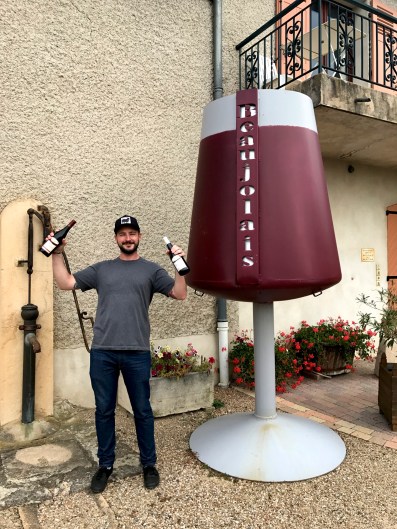
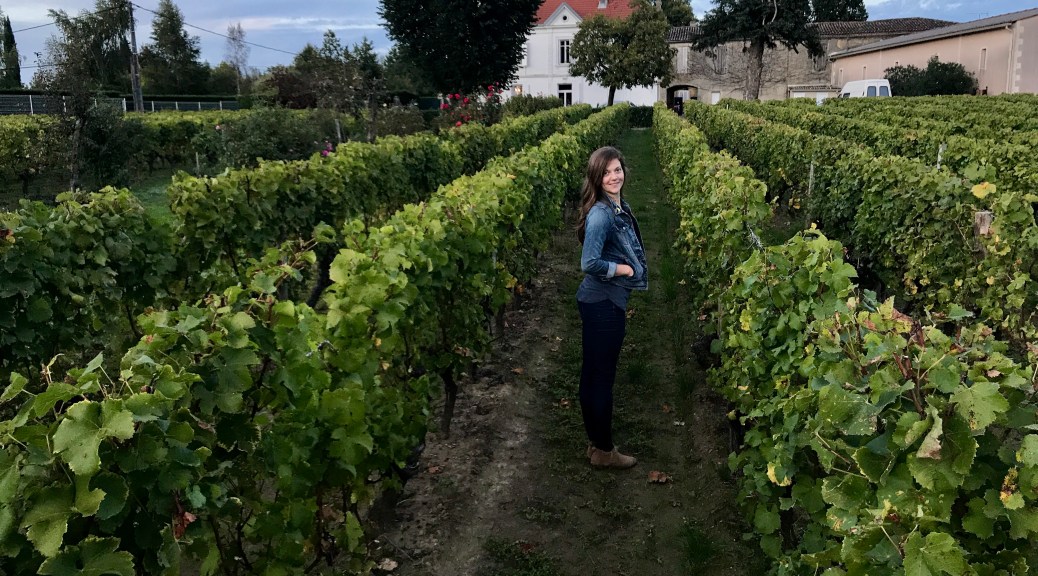
One of the “Golden Rules” of France Passion is that campers are not obligated to buy anything from the farm, but really, how could we not? What’s a few euros for a fresh snack from those who made it, especially when you aren’t paying for accommodation? France Passion is the ultimate cheapskate solution. As I mentioned, we mapped out our trip based on the food and goods we wanted to buy, so it wasn’t even a question if we would buy anything. We began our stops with Beaujolais wine (€12 for two bottles), enjoyed some charcuterie in Montregard (€4 for jar), and then followed the Route des Fromages (yes that’s a real thing!) to a farm that made the most delicious cheeses (€7 for two blocks!). We decided to try something new and drove to a fois gras farm (€10/ tin), and then finished our trip with a private vineyard tour of a winery in Bordeaux (€13 for two bottles).

IMG_5920

If you are driving across France, in an RV or campervan, the average cost of a campground is €20-€25. Do yourself a flavour (haha!) and sign up for France Passion. For the same cost, you can stay for free at thousands of farms around France, and taste the sweet, sweet goods from the farmers themselves.

FullSizeRender 11

*Not only did we pay €27 for about two and a half hours of highway driving, but also, the highways are not picturesque, and the gas prices are crazy high! When we switched to toll-free driving using Google Maps, we saw way more of the countryside, drove past beautiful little villages and towns, and paid a solid €0.25/Litre LESS for fuel. Take it from a cheapskate, unless you are desperate to make it through France in a day or two, avoid those toll roads, they just aren’t worth it!

Hiking through the Black Forest, Germany

In the south westernmost part of Germany, cornered by France and Switzerland, is the Schwartzwäld — the Black Forest — land of fairies, gnomes, and cake! As a kid, the only Black Forest I knew was Black Forest ham, so I knew we were going into good territory. The Black Forest hassome of the longest hiking and cycling trails in Europe. We knew no matter which one we chose, we’d be in for a pleasant wander through a magical forest. We chose the Feldberg Steig, a hike around the Feldberg, the tallest point in the Black Forest. We woke up at a decent time, ate some delicious cured Black Forest ham for breakfast, and were off!

IMG_1159

We arrived at Feldberger Hof, at the base of the gondola whisking people to the top but instead of forking out the cash for the easy way up, we walked. The Black Forest really is magical, especially in autumn. All the changing leaves adds a level of beauty you might not see in the summer. From the hikes we have done in Europe (You can read about them here, here, and here), we’ve learned that you don’t really need to pack trail snacks because there are hüttes all along the way, serving hot meals and beer. We, total cheapskates, brought sandwiches and oranges from home.

IMG_5860

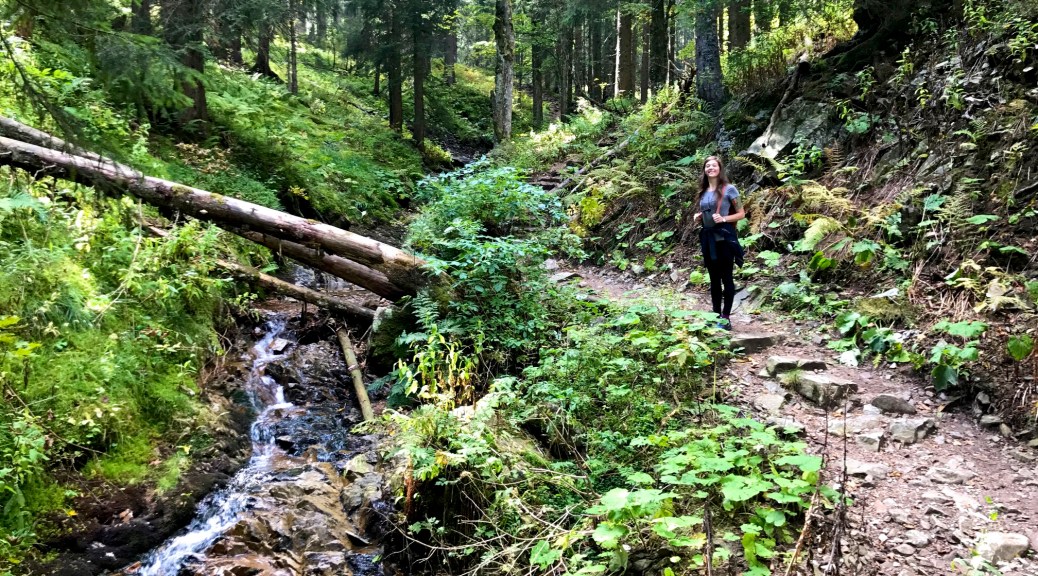
We continued the walk along more beautiful forest trails, beside babbling brooks, and mossy greens. I saw so many mushrooms, and wished I knew how to tell the poisonous ones from the edible ones (note to self, there’s gotta be an app for that!). We walked along the Feldsee, a beautiful, clear lake in the shadow of the Feldberg, surrounded by green, orange, and red trees.

IMG_5870

Our 14km hike finally came to an end with a steady climb uphill for the last 2km. When we arrived back at Feldberger Hof, we were a bit sweaty, walking on legs made of jelly. Walking back to the van, we passed a cafe advertizing Black Forest cake! How could we not? Black Forest ham for breakfast, a walk around the Black Forest all day, and a slice of Black Forest cake for dessert. Like I said, it’s pretty magical here.

IMG_8311

Drinking Beer at Oktoberfest!

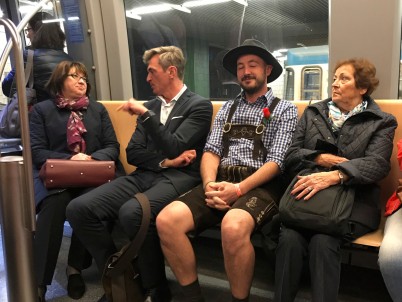
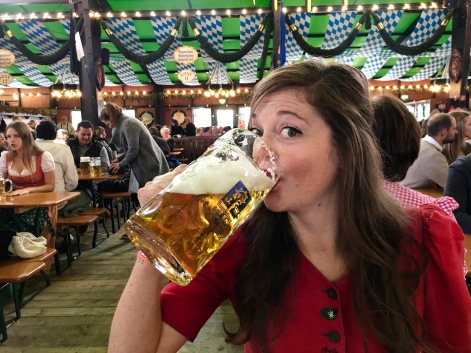
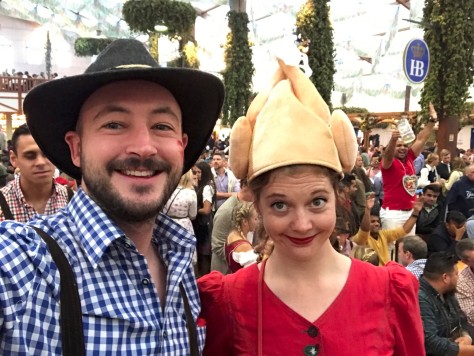
This morning we woke up, ready for Oktoberfest! We made ourselves a hearty breakfast, knowing full well the main activity of Oktoberfest is drinking beer, and got ourselves ready for the day. I donned my bright red dirndl, a traditional Bavarian dress, Michael donned his lederhosen, basically a pair of leather shorts, and we walked to the train station. After about half an hour on a train filled with people wearing everyday clothes and not lederhosen or a dirndl, we finally arrived at the square. Oktoberfest is just a huge fair. There are rides, fair games, and big food stands. What makes this fair different than others though, are the HUGE tents, lined end to end with table and benches, in which the only size beer you can order is one litre. We chose the Augustiner Brau tent first for we heard from a Bavarian local that it’s the best beer.

IMG_1661

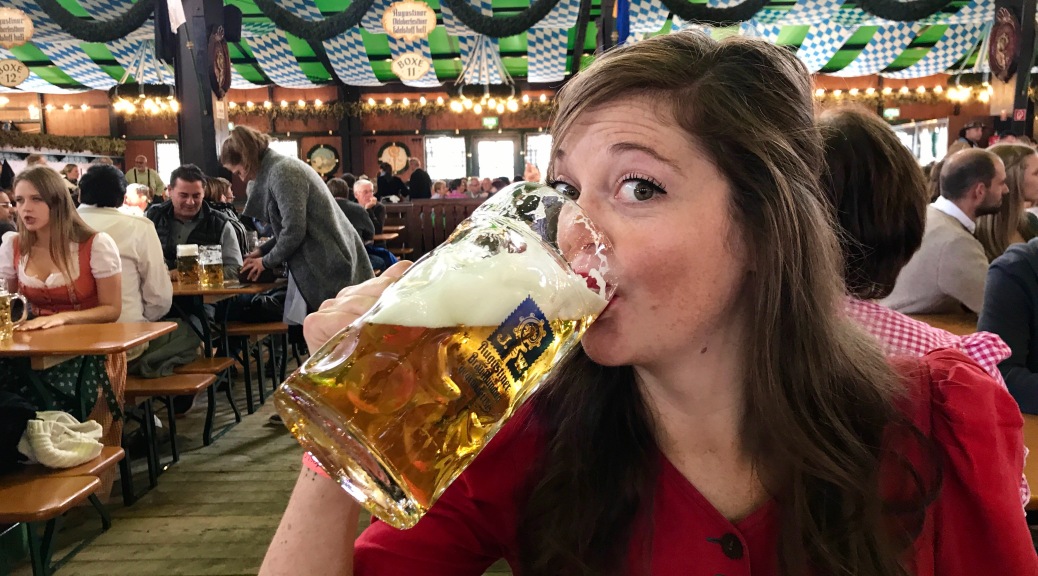
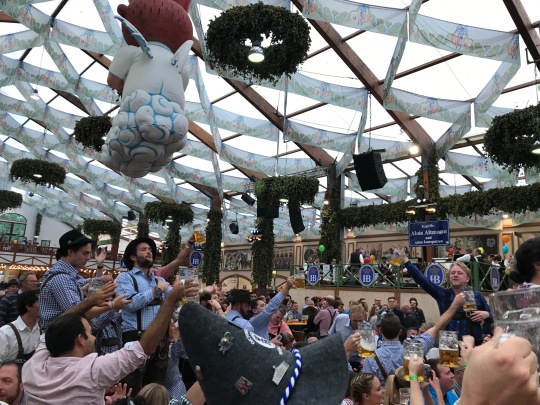
The woman who brought our beer to us was all kinds of Oktoberfest — frills and lace, tumbling cleavage, and forearms like hamhocks, carrying four, sometimes five litres of beer in each hand! Michael and I cheers’ed each other, and the other folks at our table, and drank up. People around us sang songs and danced dances that looked so silly to us, still sober folk. We just laughed and watched everyone have a good time.

FullSizeRender

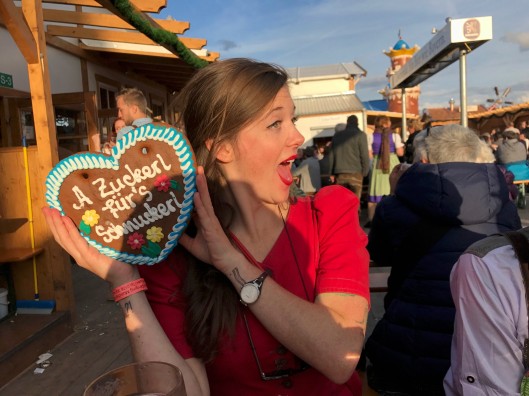
We head to another tent after we finished our first beers. On the way, we passed a stand that sold cookies. This is a weird Oktoberfest tradition, actually. It’s a gingerbread looking cookie that is in the shape of a heart, has some icing sentence written across it, and is worn around the neck. Some are small, the size of my palm, some are medium, the size of my face, and some are HUGE, bigger than my face! I had to buy one! It said something along the lines of “a sweet for a sweet,” which I thought was damn cute.

IMG_1648

Our second beer was enjoyed in the Löwenbrau tent at a table with a drunk American, a drunk British couple, and a few drunk Aussies. That second beer went down way easier than the first. Dang. We ordered our third beer. Things got a bit blurry now. All of a sudden, the silly songs and drunk people became our favourite drinking sing-a-longs, and our best friends. We sang Ain Prosit, a Bavarian drinking song that translates to something about good fortune (I think), and for some reason that song that goes, “Heyyyyyy, hey baby! HOO! HA! I wanna kno-o-o-o-o-o-ow if you’ll be my girl!” Apparently it’s a favourite sing-a-long song at Oktoberfest?

IMG_2992

I finally ate the cookie around my neck. It was horrible. It wasn’t even a cookie. I would say it was kind of like a dense bread. Or like a gingerbread cookie with no ginger flavour or sugar. Or like a really thick piece of cardboard with an icing sentence written across it. It really was horrible. I shared it with everyone at the table. They were thankful until they took a bite and realized why I was sharing. We were drunk. I guess three litres of beer is my limit. We said farewell to our new friends and hit the road. We were on the train and arrived home before ten. I do love an early night. Off with the dirndl, off with the lederhosen. You know, I’ll never forget my first time at Oktoberfest, except for the parts I just can’t remember…

IMG_1615

Ten things to do in Madrid, Spain for under €10

Madrid is a huge city. There are about 6 million people living here! There are, of course, some super luxurious things to do: dinner at the oldest restaurant in the world, Restaurante Botin, the opera at Teatro Real, drink a cocktail at the DRY Cosmopolitan Bar. If you are like me, successfully surviving on €80-€100 a day, these activities are out of your budget. But don’t fret! There are lots of cheap and free things to do in Madrid! Here are ten things to do in Madrid for under €10:

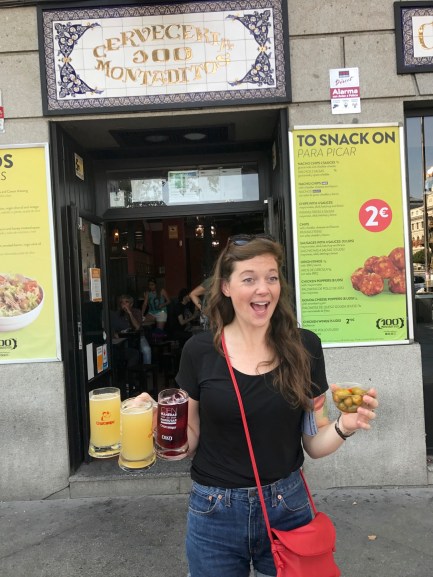
1) Have a meal at 100 Montaditos
IMG_5593

This is a great chain restaurant. Ok, I won’t lie, I think it’s kind of a like a fast food-type place, but it is full of locals, it is SUPER cheap, and the food is actually good! The menu is made up of montaditos (little sandwiches), and everything is under €2, including the pints of tinto de verano and beer! My personal faves, are the Spanish omelette and brava sauce, and the cajun chicken, smoked bacon and barbecue sauce. Delish!

Cost: If you spend €10 here, you could have 7 sandwiches and two pints of tinto de verano…

2) Check out the rooftop of Circulo Belles des artes

IMG_5350

If you’re looking for a beautiful view of Madrid, look no further than the rooftop of the Circulo Belles des Artes. This is a cool, old theatre in which you can catch a show! If you just want the view, you pay a whopping €2 and take the elevator to the roof. If you go around sunset, the line is a bit intimidating, but moves very quickly. Once at the top, there are multiple bars serving drinks, tables to sit at, and misters if the afternoon sun is too much to bare. (You can read a story about the day I went up to this rooftop here!)

Cost: €2 to go to the top, €5 for a glass of wine (but you don’t have to drink at the top!)


3) Indulge in some Churros and Chocolate at San Ginés Chocolateria
IMG_1282

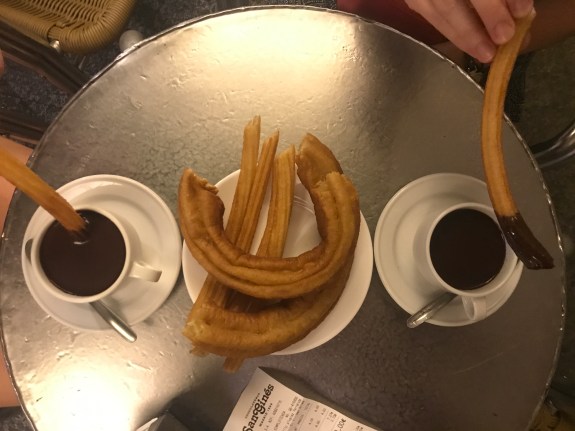
Ok, so you’ve been going through your whole life thinking, “I know dessert, I know how good hot chocolate is, I know how delicious a churro is…” Sorry friend, you have no idea how good it can be. At San Ginés Chocolateria, the hot chocolate they serve is a cup of out of this world melted chocolate. Their churros are not dipped in sugar, because they are absolutely delicious without it. You can also enjoy some perros, which are bigger, doughier churros (I preferred the churros).

Cost: €10 got us a plate of churros, a plate of perros, and two cups of hot chocolate.

4) Take a FREE walking tour

IMG_7745

I have said it once, I will say it again, Sandeman’s New Europe free walking tours are the absolute best way to see and learn about a city (I proudly say this without any sort of compensation from the company). They offer free walking tours in 18 cities in Europe, and every time I have taken one (8 times!) I have been SO impressed by the guide, the route, and the information. It is called a free walking tour, but the guide works on a tip basis, so you pay what you think the tour was worth.

Cost: €10 (or if your guide was AMAZING and deserves more, go for it!)


5) Stroll through Retiro Park
IMG_4860

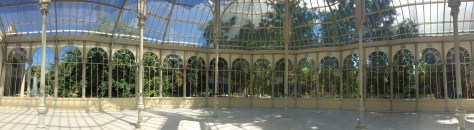
Ok, there is so much to do in Retiro Park, it’s insane. To stay free, just go for a walk! There is a rose garden, beautiful fountains and water features, tons of green space, and a very instagrammable glass building (see below picture). You can also rent a row boat on the main water feature in the park (I did not do this because it was damn hot, and there was no shade, but the rental was under €10). I had a phenomenal nap in this park, so I have very fond memories of it.

Cost: FREE!


6) Head to El Buo for a Spanish omelette!

IMG_5339

On the menu at El Buo is a Spanish omelette for €10. We ordered the candied onion and goat cheese omelette. Now, this is the biggest omelette you have ever seen (if it isn’t, PLEASE comment and tell me where you got a bigger one). This is absolutely one of those things you have to share. We shared between four people, and I couldn’t even finish my quarter piece. Between four of us, the omelette and some drinks each, we were up to €8 each.

Cost: €10 for an omelette (shared between four or more).


7) Check out a flea market on a Sunday
IMG_5382

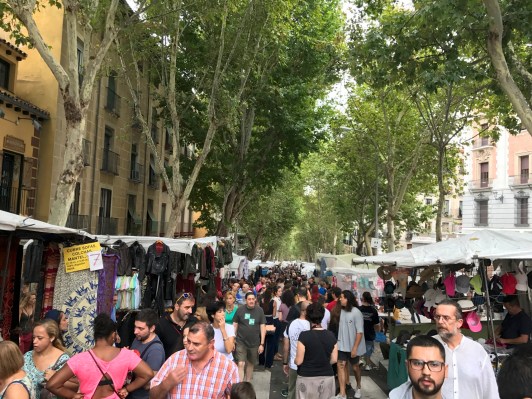
On El Rastro, every Sunday, there is a flea market! This is the kind of activity in which you decide how much you spend. It could be a free day! It could be an expensive day. How much stuff do you want to buy?! Here, you will find cheap AF clothes, accessories, souvenirs, art, and homewares. I bought a fanny pack (for a very specific reason), and a pair of vintage Levi’s jeans I ended up cutting off into super cool shorts. I spent €18.

Cost: FREE (if you don’t buy anything).


8) Go to La Titi for wine

IMG_5551

Right across the street from San Fernando market (which is another place to go in Madrid for under €10…bonus!) is a little wine bar called La Titi. We went at about 8pm on a Saturday night and the place was bustling! All locals, enjoying wine, chatting with friends and making new ones. We ended up having a hilarious conversation with two Madridians about Spain’s ludicrous history. The wine was cheap, the tapas were delicious (and of course, free with the drink). Highly recommend this cute, off the beaten path, wine bar!

Cost: €2-3 depending on the glass of wine you order. Tapas are free!


9) Have a beer in Dos de Mayo Plaza


During the day, this is a lovely plaza for people watching, there are lots of shops nearby to peruse, and cafes surrounding, to wet your whistle! At night, people flock to this plaza to sit, drink, play guitar, and hang out with their friends. This is the cheapest night out you can possible have. It’s BYOB, and if you forgot to, you can buy a beer for €1 off the guys walking around selling. Don’t forget though, you aren’t technically allowed to drink in public, so if the police come, the square might clear right out…

Cost: FREE! If you buy a beer from the guys selling them, €1


10) Enjoy sunset at the Temple of Debod
IMG_1105.JPG

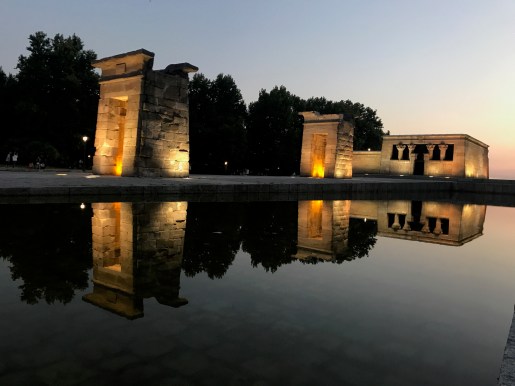
After an easy walk up a hill either via stairs or the road, you will reach the beautiful temple of Debod. The temple was originally erected in Egypt, but was dismantled and rebuilt in Madrid. It’s a beautiful spot to go during the day, but with little shade at the site itself, can get really uncomfortable. If you go at night for sunset, it’s a total stunner. Bring a bottle of wine with you from a nearby grocery store and have a glass of wine as the sun goes down. Cheap AND romantic!

Cost: FREE (or with a €3 bottle of wine)


Heading to Valencia? Check out five things to do in Valencia for under €5 here!

Traveling to the north of Spain? Here are ten things you can do in the north!
Five things to do in Valencia, Spain for Under €5

I have been to Valencia a few times, but never for more than a week. This city is beautiful, there is so much to see and so much to do. The beautiful beach, the graffiti all over the city centre, and the paella – oh, dang that paella.  My life is on the road, so I live on a super strict budget when I am being a tourist. Here are five things to do in Valencia, Spain, for under €5:

1. Do a free walking tour

IMG_6335

The best way to see a city is walk around it, but sometimes, it is more fun to have stories accompany the views. I am a huge advocate for free walking tours. The guide works on tips, so you decide how much they deserve at the end of the tour. I normally think €5 is good (because I am traveling for an extensive period of time and have a SUPER tight budget), but it’s up to the attendees what they pay. I like that. (Check their website here: https://freetourvalencia.com/en/)

Cost: €5 (or whatever you feel like!)

2. Drink Horchata at the Horchateria Fabian

Horchata is a delicious Spanish milk-like drink made from tiger nuts. No, not tiger’s nuts, tiger nuts. They are a delicious, naturally sweet nut and when pulverized into milk, make a delightfully light, super sweet drink. One of the best, sweetest hochatas we had was here, at Horchateria Fabian. It looked like Pop’s Chocolate Shop straight out of Archie Comics and the couple working was so lovely.

Cost: €2 for a cup of horchata, €1.50 for a farton pastry for dipping!

3. Climb St Michael’s tower

IMG_4872

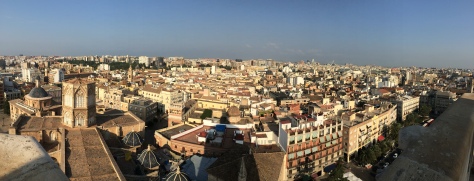
If you’re like me, you like seeing cities, but LOVE seeing them from a tall place. St Michael’s tower offers a beautiful, panoramic view of the whole city. From here, you can see everything, the market, cathedrals, and even as far as the City of Arts and Science! It costs money to go into the cathedral underneath the tower, but the climb to the top is only €2 for an adult. The climb is hard, but fast. Prepare to sweat a little bit, but don’t let it scare you from doing it.

Cost: €2 for a climb to the top!

4. Wander around the City of Arts and Science

IMG_5405

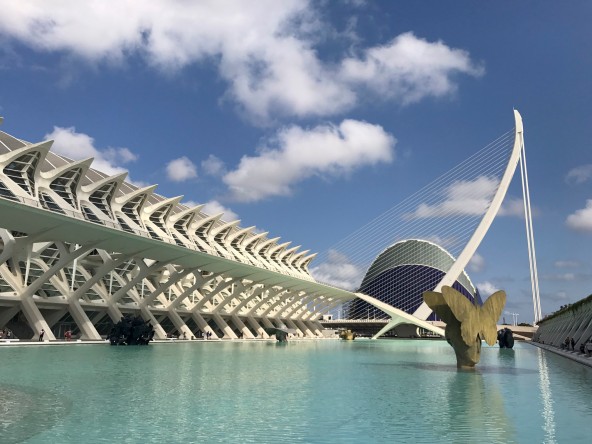
The City of Arts and Science is an architectural marvel. I am not an architect, so I don’t actually know if it’s a ‘marvel,’ but as someone who knows nothing about buildings, this place is total magic. There are four different areas: a science museum, an arts theatre, an aquarium, and a IMAX theatre. It costs a heck of a lot to go into any of them, but if you are a cheapskate like me, you can wander around the grounds for free and check out all the stunning buildings from every angle.

Cost: FREE!  (Check their website https://freetourvalencia.com/en/ for pricing about entrance to events)

5. Rent a bicycle and cycle through the park!

Running just north of the city centre is an ancient river bed that dried up a long time ago. Instead of trying to make it a river again (can you even do that?), the city of Valencia turned the riverbed into a beautiful park. Now, it has playgrounds, fields for sport, and beautiful, uninterrupted bicycle paths. Renting bicycles for a whole day, or for multiple days can be kind of expensive, but for an afternoon activity, you can rent a bicycle and cruise around the park for an hour.

Cost: €5 for an hour from Valencia Bike Rentals (their website http://www.valenciabikes.com/en/bicycle-rental/)


Heading to Madrid? Check ten things to do in Madrid for under €10 here!

Heading up north? Check ten things to do in the north of Spain here!

At La Tomatina, in Buñol, Spain.

Have you ever been in a food fight? Someone throws a spoonful of peas at someone sitting cross the table and then total chaos erupts in the school cafeteria leaving you wondering, “who the heck is going to clean that up?” At least that’s what happens in movies. Ladies and gentlemen, I, Beth, of Where the F is Beth, have never been in a food fight! I felt like I needed to check it off my never ending to do list, but I wasn’t going to settle for a spoonful of measly peas. When I do something, I like to do the best, the biggest, the MOST ridiculous. So, I journeyed to the small village of Buñol, Spain and took part in the world’s biggest food fight — La Tomatina.

Our day began at the crack of dawn. We were instructed to be at the Plaza de Tetuan at 6am, at which time the busses would leave and whisk us to Buñol! The bus ride was fast and easy, and when we arrived, we joined hoards of other busses. They say 22,000 people attend this festival, that’s a lot of busses! The crowd wandered through the village and down the hill, to the old town. We walked past the street where the fight would take place and saw that all the locals had covered their houses and balconies in tarps. To get us ready for the fight, Festivals All Around had a big pre-party with free sangria and live music.

DCIM100GOPROGOPR0554.

After a few drinks in our bellies, we left the party and walked to where some of the festivities had begun. As we walked, the locals sprayed us with water! Water dumped off balconies, hoses sticking through the holes in the tarps and men on the streets, splashing buckets of water at us! The first part of La Tomatina is when the attendees try to climb a huge pole covered in grease, and snatch the jamón (ham) from the top. We stood in the crowd and watched as multiple soaking wet, sangria drunk men and women clambered on top of each other for their chance at La Tomatina glory. They say the tomato fight doesn’t begin until the jamón is claimed, but while we stood there and watched attempt after failed attempt, a local nearby said nobody has reached it in five years. We left the crowd and moved back up to the skinny street where the tomato trucks would be driving through.

Screen Shot 2017-08-31 at 10.54.23 am

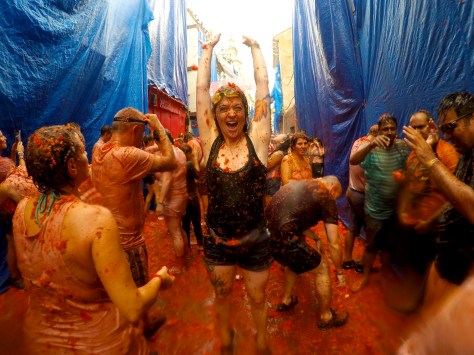
Finally, we heard a truck horn! They’re coming! The tomatoes are coming! The trucks drove down the dangerously skinny streets and we were pushed up right against the tarps to allow them to pass. I reached into my fanny pack and took out my swim goggles. I’m ready. People stood in the backs of the trucks, throwing tomatoes down on to the streets. Chaos ensued. Pick up a tomato, squish the tomato in your hand, throw the tomato at a total stranger, repeat…until the next truck blares its horn, drives around the corner, and empties its contents onto the street. Six trucks went by. I think. Maybe seven. It’s all a blur — tomatoes flying past me, pulp showering me from all sides. The fight continued for an hour. I didn’t stop laughing for a second.

DCIM100GOPROGOPR0603.

The streets ran red with tomato juice. I stood ankle deep in the mush. Tomato puree dripped off my head, into my ears, down my back, and into unmentionable places. My throat hurt from being pelted with an unripe tomato, my knees hurt from falling onto the tomato-wet pavement, my face hurt from smiling too much. Best. Day. Ever.

DCIM100GOPROGOPR0595.

Hiking to the Schweinfurter Hütte in Tirol, Austria

Holy moly! The second day of our three-day hut hike through Tirol, Austria was a big day. The first day was pretty easy: we arrived at the hut around noon, drank a bunch of beer to pass the time, and went to sleep around 9pm. Day two was a much bigger and more taxing day. I wish I had known that before drinking a bunch of beer…

We woke up abruptly when Michael’s iPhone alarm went off at 7am and it almost vibrated itself off the shelf. We quickly made ourselves ready for the day — it’s easy to be fast when you just wear the same thing as yesterday —  and went upstairs to the dining area. Being the cheapskates we are, we did not pay for the Halfboard at this refuge hut (when you pay for “Halfboard” you get a bed to sleep in, plus dinner and breakfast). We only paid for a bed and figured we would just eat our own food for breakfast. We brought out our bread, pre-boiled eggs, cheese, and mayo, and made a few lovely open-faced sandwiches. People at tables nearby looked at us funny, but we didn’t care. It feels too good to be a cheapskate to care what anyone thinks.

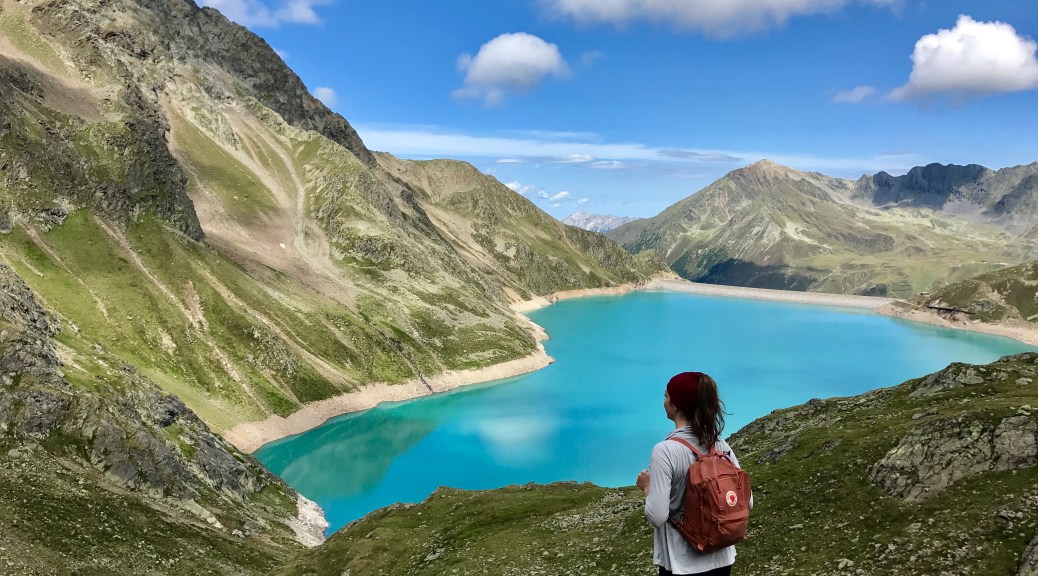
Our day two hike would take us to Schweinfurter Hütte (part of what makes these Austrian hut hikes so fun is the names of the huts). We began our hike under thick cloud cover, through some misty rain. We climbed up a huge hill, to the bottom of a man-made dam, and stopped for a rest. Turns out having a bunch of beers the night before a big hike can really dehydrate you! We stopped and drank a bunch of water before continuing. The sky began to clear just as we reached the top of the dam. It was absolutely beautiful! The water was so blue, the sun was peeking through clouds, and the view down to the valley was lovely.

FullSizeRender 6

We walked along the water, and then reached the real climb. We scrambled up shale and we climbed over boulders. I used my arms to balance my body when my exhausted legs shook; it really was straight up. And just when I thought we were so badass for hiking up this crazy wall-like trail, a few mountain bikers passed us going the opposite way, biking DOWN this crazy wall-like trail! I felt less badass in that moment.

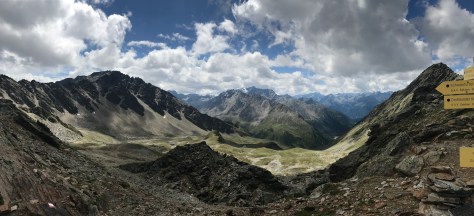
We reached the notch (that’s cool hiking lingo for the top of the pass), and had to stop, mostly because our legs were so tired they needed a break, but also because the view was magnificent!! What better snack to eat at the top of a mountain that an apple with some Nutella?

IMG_4680

The hike down felt fast. We walked through pastures on a very scenic trail along a fast flowing creek. We walked past some sheep who mistook us for shepherds and followed us for a while. We came to a precipice and from where we stood, we could see the length of the whole valley, and under us, the Schweinfurter Hütte! We decided to hang out at this perfect lookout point and enjoy lunch.

IMG_2075

We finished eating and walked the rest of the way down. My thighs were shaking, my feet were aching, and my knees were about ready to give up! We checked into the hut and headed right back outside to the creek that runs alongside the building. We took off our shoes and socks, pulled up our pant legs, and dipped our swollen feet into the ice cold glacial water. There’s nothing better than a post-hike glacial creek foot soak! Thanks for the best day ever, Austria!

IMG_4722

Seeing the Graffiti at Teufelsberg in Berlin, Germany

Berlin is just so cool. You know how a hipster is someone who is trying to be cool, but trying to make it seem like they don’t care how cool they are? I feel like Berlin is the original hip. Like, Berliners are what hipsters are fashioned from and aspire to. The city just keeps getting cooler and cooler the more things I discover. Here’s one of those cool things:

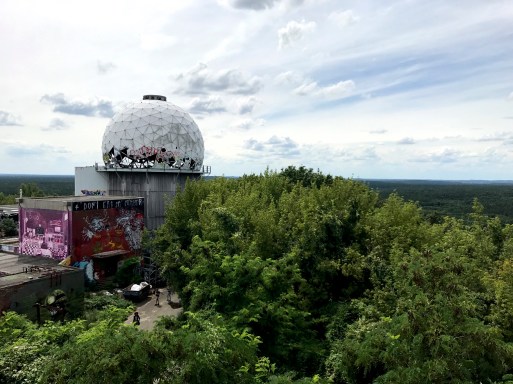
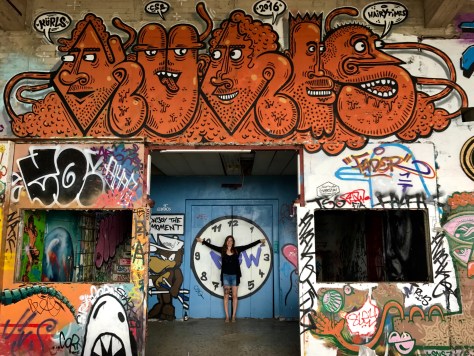
In the middle of Grünewald Forest, is a man-made hill called Teufelsberg, created from rubble and debris moved from Berlin after World War II. The Americans used the Radomes -weatherproof enclosures that protects a radar antenna –  atop the hill as listening stations during the Cold War. When the Berlin wall fell, the equipment was removed, but the Radomes and buildings remained. It’s now what I believe is a squatter’s paradise, and is open to the public! Michael and I decided that today we would do what we do best: hike to the top of something and have a picnic.

After a quick grocery shop for the perfect picnic (sandwich ingredients, cherries, and a litre of wine) we took a train then a bus to the edge of Grunewald Forest, and began the 30 minute (according to Google Maps) walk to the top of the hill.

We were rudely greeted by swarms of mosquitoes. Swarms I tell you. Swarms!! Oh my gosh, they were everywhere. A cloud of mosquitoes followed us as we walked, so we ran. We ran through those woods as fast as we could, constantly swatting ourselves and each other when a mosquito would land. I laughed, I cried, I itched, I swatted, and I ran. The mosquitos had the time of their lives.

We ran all the way up the hill, passing other swatters like us running the other way. We finally arrived to an opening in a chain link fence. Still swatting at the ravenous mosquitoes, we met some men at the Teufelsberg “ticket booth.” We gave them our €8 each and signed in to the guest book. We continued to climb up the hill and the mosquitoes thinned. Thank goodness.

FullSizeRender 9

Ok, so this place is so cool. We walked towards the buildings and found graffiti and spray paint tags everywhere. We climbed the stairs up and up and up into the towers. The art surrounding us was beautiful. This is absolutely the kind of thing I’ll pay €8 to see. We reached the roof of the building, where we could see everything from Berlin city centre and the TV tower, to the rolling hills covered in wind turbines, majestically spinning on the horizon. Wow, it was quite the view.

FullSizeRender 10

We climbed up and up and up again, to the top of the tallest Radome. Here, we discovered more art, and some of the craziest echoes I’ve ever heard. If we stood next to the walls of the sphere and even just whispered, our own whispers came back to us three or four times from around the walls. We started whispering words like, “secrets,” and singing, in the creepiest tune we could create, “I’ll never tell”. Back down in the open air, we found a picnic table in the shade of one of the domes and enjoyed our perfect sandwiches and sipped our perfect wine.

FullSizeRender 11

After our picnic, it was time to leave. We finished our litre of wine (I know, we are rock stars), and were just drunk enough to feel brave enough to run back through the swarms of mosquitoes. We wandered around the complex a little more to make sure we didn’t miss any art, and then walked towards the entrance. We waved goodbye to the men at the “ticket booth” and then began our run down. And run we did. All the way to the train.

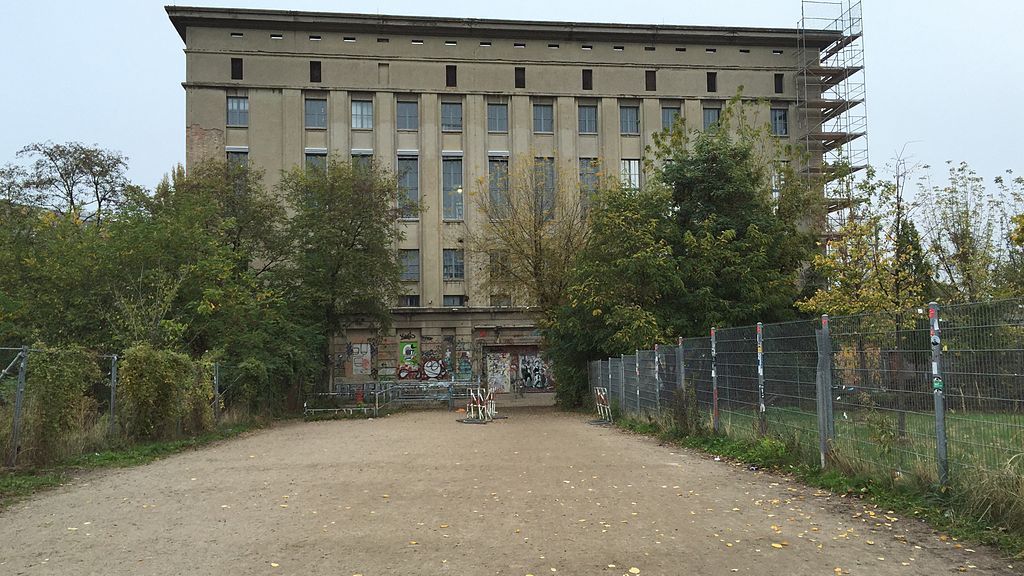
How to get into Berghain in Berlin, Germany

There are a few things I would say Berlin is known for: the currywurst, a pork sausage served with curry ketchup; the wegbier, like a beer ‘to go’, directly translated to “away beer”; and of course, the extreme techno scene. I love sausages and I love beer, but I have never really given techno a chance. So, when I heard about Berghain, a techno club in Berlin, I desperately wanted to go and “do” techno right.

Berghain is an institution in the Berlin techno scene that opens its doors on Friday evening and doesn’t close until Monday morning. People say stepping into Berghain is like stepping into another world, and if you believe all the rumours, at Berghain, anything goes. There is no guest list, no bottle service, no VIP area. The other thing you should know about Berghain is that it’s said to be near impossible to get in! People recount evenings they stood in the line outside for 2 hours, just to be politely told that no, in fact, they would not get in. With one flick of the wrist, the doorman decides your fate, right means yes, left means no. There seem to be no rules, no dress code, no reasoning! So how do you get in?!

This is how we did it:

We woke up on Sunday morning and started our day with a lovely breakfast. I had a tomato, mozzarella, and pesto panini and a chai latte. The chai latte was so frothy and creamy, it was actually really good. We sat outside and watched as the clouds prepared to drop some rain. We took the S-bahn through the city, past the TV tower, and arrived at Ostbahnhof station.

We ended up walking behind some kids that looked like they might be going to Berghain too. They were all dressed in black, and one of them had his phone in his hand, playing techno music. “To get in the mood,” I thought to myself. They looked pretty cool, like they knew and understood the techno scene.

We turned a corner on the path and could hear the booming bass from the club. I began shaking in my boots. Oh man, I just knew we weren’t going to get in. I just don’t think I am cool enough for this place! Everyone talks about how exclusive this place is, and here I am, little Where the F is Beth going to try to get in? Ha!

The cool looking kids were in front of us in line. The doorman knew as soon as he looked at people whether or not they were Berghain material, so the line moved quite quickly. Out of the four or so groups of people I saw at the door, two people got in, and their friends were told to leave. Phew! I was really shaking now. The cool looking kids got to the front of the line. The doorman looked at all four of them and shook his head no, wrist flick to the left. Then, one of the kids opened his wallet and offered the man a bribe. It, of course, didn’t work. We stepped up. The doorman looked straight into my soul through his blacked out sunglasses.

And then we got in.


For more things to do in Germany, read stories of other adventures here!

How to get a Youth Mobility Visa while in Germany

I began traveling around Europe with big dreams and plans of where to go and how long I wanted to stay. Italy, Switzerland, the Netherlands, Germany, Austria, Spain, Portugal… I had plans to stay for at least a year and just travel around to my hearts content! I would be hopping countries every 30 days or so, so I didn’t even think it was a possibility I would need a visa. Then someone mentioned the Schengen area.

The what?!

The Schengen Area is made up of the following 26 countries:

Austria, Belgium, Czech Republic, Denmark, Estonia, Finland, France, Germany, Greece, Hungary, Iceland, Italy, Latvia, Liechtenstein, Lithuania, Luxembourg, Malta, The Netherlands, Norway, Poland, Portugal, Slovakia, Slovenia, Spain, Sweden, Switzerland.

The Schengen countries have a border-free agreement that allows the residents to move and work freely throughout the entire area. Great, right? Except for citizens who are not from the Schengen. We are allowed entry into the Area for 90 days within any 180-day period. The days don’t need to be consecutive, the clock begins the day you arrive and doesn’t reset until day 181.

For example, if I enter the Schengen for 30 days in May, then come back for 30 days in July, it is 60 days in 180 days.

If you’re like me and have big dreams of plans of where to go and how long you want to stay, how do you stay in Europe longer???

1) You can sort your trip out to move in and out of the Schengen while you are traveling.
You could begin your trip in Spain, Portugal, and Italy, for 90 days, and then move over to the Balkans and take another 90 days to see Croatia, Bosnia, Montenegro, Albania, and up through Serbia. Then back into the Schengen for 90 days, then out (maybe to Morocco?), etc. It is totally possible, it just requires a bit of planning and counting days on a calendar.

2) You can get a visa for a country in the Schengen. If you take a language course in a country, for example Spain, you can apply for a student visa in that country, and with that visa, you can travel freely within the Schengen. Many countries have agreements between them to allow citizens to apply for working holiday visas. A working holiday visa allows visitors to live and work in the country, and again, travel freely within the Schengen. Every country has a different agreement, the best place to look is on your country’s government website.

I am Canadian, I am under the age of 35, and I decided to apply for a Youth Mobility Visa in Germany. This would allow me to work in Germany, if I want to, and to travel freely in all the Schengen countries.

This blog post is about how I registered, got my residence permit, and received my Youth Mobility Visa in Germany.

What the Canadian government website tells you is that you have to apply for your Youth Mobility Visa while in Canada, BEFORE you arrive in Germany. This is not the case anymore. You CAN apply for this visa while in Germany. I repeat, you CAN apply for the Youth Mobility Visa while already in Germany. Apparently some of the aliens authorities are not familiar with the process, as it is new, but the one in Berlin knows about it.

This is how you can get your visa in Berlin, Germany:

Step 1)
You must register at a Bürgeramt
You can make an appointment three weeks in advance, at this website (Make an appointment here). You can also walk in, take a number, and wait. (Some of the Bürgeramts are by appointment only, so make sure if you are going to test your luck with a number, you don’t go to these ones. Check out the list here).
To register, you can bring a rental agreement and written confirmation of occupancy from the landlord
Some hotels and hostels will allow you to register as a resident there.
This step is mostly so they see you aren’t going to sleep on a park bench.

Once you have the certificate of registration, make a photocopy of it!

If you plan to drive in Germany, you will need to get a German driver’s license at the Bürgeramt also. But you will need a second appointment for that. (Read a bit about driving in Germany, and around Europe in general, here).


Step 2)
Go to the Ausländerbehörde a few hours before it opens (the hours are Monday and Tuesday at 7am, and Thursday at 10am). Straight up, we arrived on Monday morning at 6am, and there were already 60 people ahead of us in the queue. We took our number and waited about an hour and a half until we were seen.

What you need to bring with you:

  1. A valid passport
  2. 1 current biometric photo
    35mm x 45mm, frontal shot with neutral facial expression and closed mouth, looking straight into the camera, light background
    You can have this taken at a photography studio OR go to one of the PassPhoto booths in any main train station in Germany and take them there.
  3. Foreign travellers’ health insurance that is valid for one year
  4. Proof of funds in the amount of at least 2000 Euros
    you can print off a bank statement
  5. The Application for Issuance of a Residence Permit (The form in English, German, French, and Italian: download it here)
  6. The photocopy of the certificate of registration from the Bürgeramt

This is how I did it! It took just one day. They granted my visa in the moment. It was a bit of paperwork and running around to different offices, but now, I can stay in the Schengen for the entire year, move freely around, and even work in Germany if I so choose!


And once you’re in Germany, here are some things to do!


If you have any questions or comments about the process, please send me a message or comment below! Do you have a different experience? Or tips for visas in another country? Let me know!